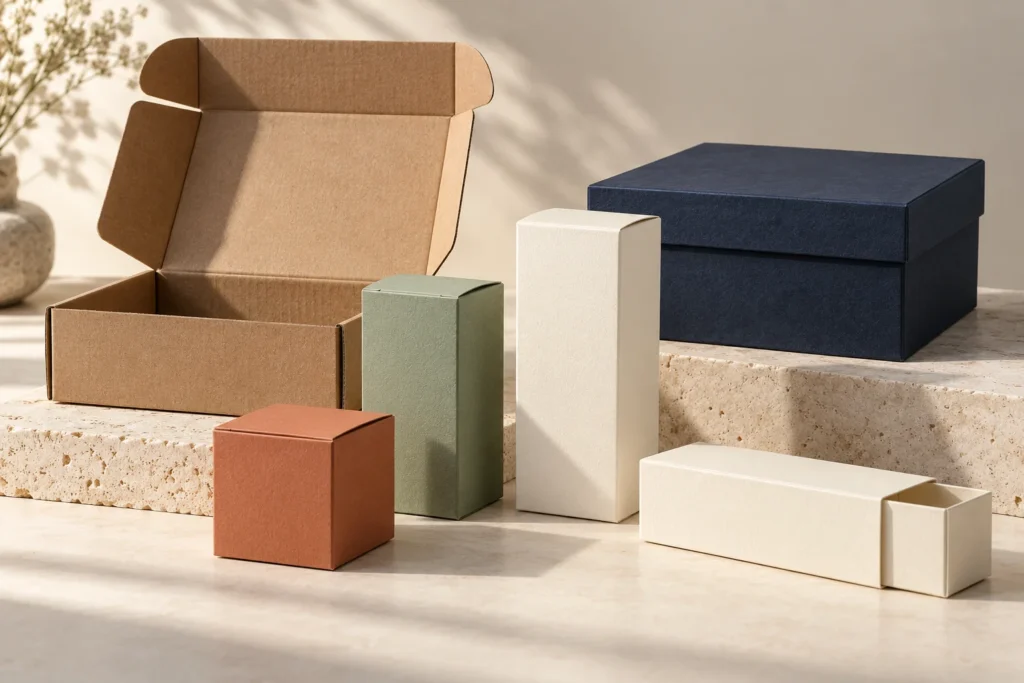
Corrugated cardboard
Corrugated board combines liner sheets with a fluted middle layer. Flute profile, liner composition and construction affect cushioning and strength. Tell your supplier the packed weight and distribution environment so they can recommend and test an appropriate grade.
Paperboard and folding cartons
Paperboard is typically used for lightweight retail cartons. Its surface can support detailed graphics, but thickness alone does not establish performance. Ask about board grade, coating, folding behavior and suitability for your product.
Kraft and rigid board
Kraft paper has a natural brown appearance, though kraft can also be bleached. It can be used in different structures. Rigid board supports sturdy presentation boxes; these boxes often require more space for storage and shipping than flat folding cartons.
Consider intended use
Think about moisture, grease, temperature, direct food contact and handling. Request supplier documentation appropriate to your intended use. Recycling options depend on coatings, mixed materials and local collection systems; avoid assuming that every paper-based package is recyclable.
Ask for material samples
Compare texture, print appearance and product fit with real samples. Record the chosen grade and finish in your brief so alternative supplier proposals can be assessed against the same requirements.