Start with the product
List the product’s dimensions, weight and fragile areas. Consider whether it needs an insert, moisture protection or an outer shipping box. A retail carton can present a product beautifully, but may not provide enough cushioning for parcel delivery on its own.
Choose a structure
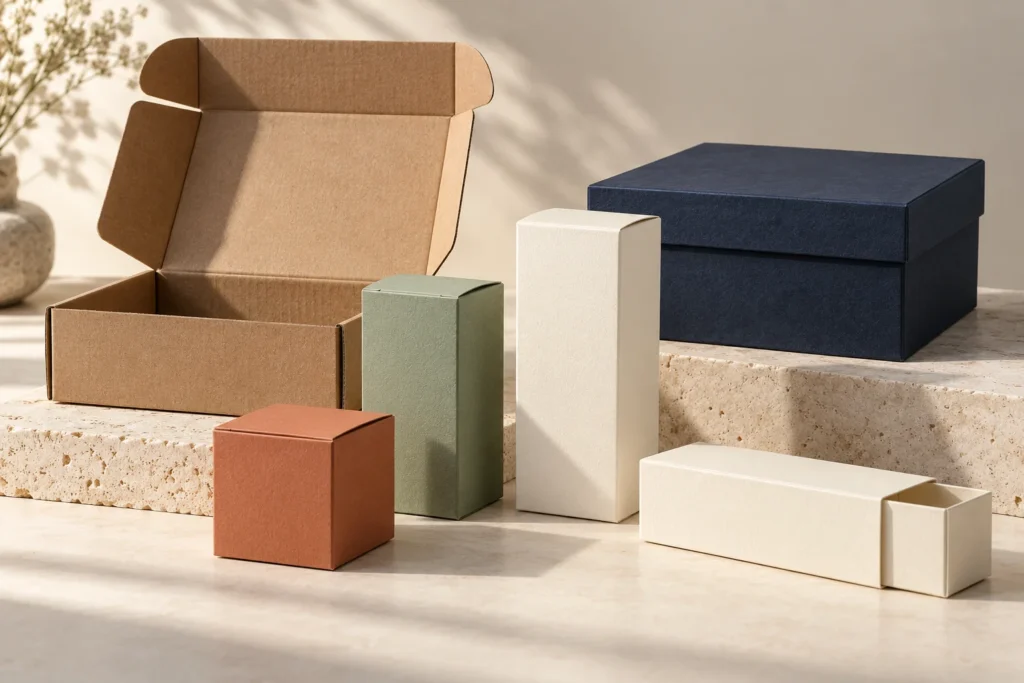
Mailer boxes are often used for e-commerce deliveries. Folding cartons suit many lightweight retail items. Rigid boxes offer a structured presentation for gifts. Sleeves add a branded outer layer. Match the structure to the handling journey, rather than choosing by appearance alone.
Compare materials
Corrugated board has fluted layers that help provide cushioning. Paperboard offers a smooth printable surface for folding cartons. Kraft refers to a type of paper and its natural appearance; it is not a guarantee of strength. Rigid board is thicker and often wrapped in printed paper.
Prepare a supplier brief
Include internal dimensions, quantity, material preference, printing, inserts, destination ZIP code and a target date. Specify whether that date means shipment or arrival. Ask the supplier to separate tooling, artwork setup, samples, freight and unit cost so you can compare the complete proposal.
Approve a sample before production
Confirm product fit using a structural sample. Review artwork on the supplier’s dieline and check folds, seams, bleed and text placement. A digital proof does not show every finish or color accurately. Ask whether a physical printed sample is available and what it costs.